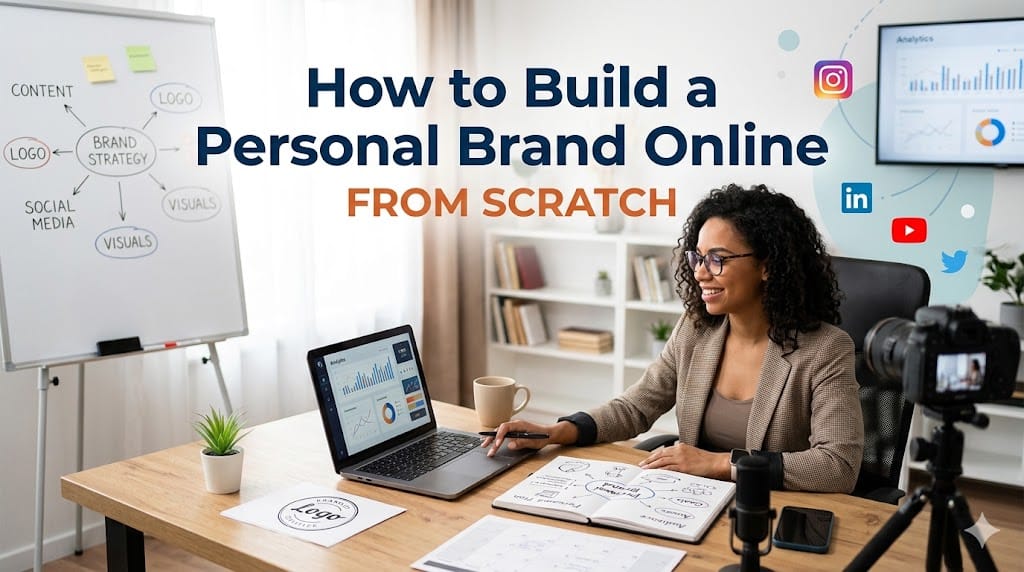
Most people who want to build a personal brand spend months figuring out their logo colors and their content schedule before they’ve answered the one question that determines whether any of it works:
What do I want to be known for, by whom, and why would that specific group of people listen to me rather than someone else?
That question is uncomfortable to sit with. It requires genuine self-assessment — not about what you’d like to be known for in an ideal world, but what you can credibly claim to know more about, or have more useful experience with, than most people your target audience could find on the same topic.
Without a clear answer, personal branding becomes an exercise in producing content about nothing in particular for nobody in particular. With a clear answer, it becomes one of the most durable advantages you can build in any professional field.
Here’s how to build one from scratch — starting with the question most people skip.
What a Personal Brand Actually Is (And Isn’t)
A personal brand is not a logo. It’s not a color palette. It’s not a content schedule or a posting frequency or a follower count.
A personal brand is a reputation — specifically, the consistent set of associations that form in someone’s mind when they encounter your name. What do you stand for? What do you know? Who do you help? What’s your perspective on your field?
The reason “brand” is the right word is that it implies something beyond merely having a job or producing content. Brands carry expectations. When someone has followed your work for six months, they should be able to predict your general take on a new development in your field — not because you’re predictable in a boring way, but because you have a coherent perspective that expresses itself consistently.
What a personal brand is not: a performance. The personal brands that fail fastest are the ones built on a manufactured persona — a curated version of someone that doesn’t match the person behind it. They fail because manufactured personas are exhausting to maintain, inconsistent under pressure, and ultimately unconvincing to any audience sophisticated enough to matter. The personal brands that compound over years are built on genuine perspective, genuine expertise, and genuine communication style — amplified and made visible, not invented from scratch.
This doesn’t mean everything has to be authentic in a raw, oversharing way. It means the professional identity you project should be grounded in who you actually are and what you actually know.
Step 1: Define Your Positioning Before You Create Anything
Positioning is the most important strategic decision in personal branding and the one most people make last, after they’ve already spent months producing content in the wrong direction.
Your positioning answers three questions simultaneously:
Who are you for? Not “marketers” or “entrepreneurs” or “developers.” Specific enough to be useful: “early-stage SaaS founders trying to figure out content-led growth before they can afford a marketing hire.” The more specific the audience definition, the easier every subsequent content and outreach decision becomes. When you know exactly who you’re writing for, you know whether a topic is worth covering, whether a collaboration makes sense, and whether a piece of content is actually useful to your audience or just interesting to you.
What specifically do you know? This is your claimed expertise — the intersection of what you’ve done, what you’ve learned from doing it, and what you can teach usefully. It should be specific enough to be credible and broad enough to support 50+ pieces of content. “I know about marketing” is too broad to be credible. “I know how to build an email audience from scratch without a paid ads budget, because I’ve done it three times across different industries” is specific, credible, and contains a perspective.
What’s your point of view? Personal brands without a perspective are just informational resources — useful but forgettable. The people who build memorable personal brands have opinions. They believe certain commonly accepted practices are wrong. They see the same problem differently than most people in the field do. They’re willing to say “here’s what most people get wrong about X and here’s why I think that.” Perspective is what transforms a content producer into someone worth following.
These three answers — audience, expertise, perspective — are the positioning foundation. Everything else in personal branding is implementation.
Step 2: Choose One Platform and Go Deep Before Going Wide
The most common mistake beginners make in personal branding is trying to be everywhere simultaneously. LinkedIn, Twitter/X, Instagram, TikTok, YouTube, a newsletter, a podcast — all at once, posting mediocre content across six platforms because they’ve read that “diversification” is important.
Diversification is important eventually. At the beginning, it’s a recipe for producing nothing good on any platform.
Choose the platform where your specific audience actually spends time and where the content format plays to your natural strengths. These two criteria together narrow the field significantly.
If your audience is B2B professionals and you’re most comfortable writing — LinkedIn. If your audience is developers and you communicate well through tutorials — YouTube or a technical blog. If your audience is creative entrepreneurs and you’re visually expressive — Instagram. If your audience responds to real-time commentary and you think well in short form — X (Twitter). If your audience wants depth and you can teach well in long form — a newsletter plus a blog.
There’s no universally correct answer. The right platform is the one where the combination of “my audience is here” and “I can produce genuinely good content in this format” is strongest.
Go deep on that one platform for six months before adding a second. Six months is long enough to learn what resonates, build an initial audience, develop a content rhythm, and generate the output that makes the second platform’s launch easier — because you’ll have proven content to adapt rather than starting from zero twice simultaneously.
Step 3: Content Strategy That Builds Authority, Not Just Visibility
There’s a difference between content that makes people aware of you and content that makes them trust you. Most personal brand advice optimizes for awareness — reach, views, follower growth. Awareness without trust produces an audience that knows your name and has no particular reason to care about your work.
Authority-building content has a different character. It demonstrates specific, useful knowledge. It shares original perspective, not just curated information. It’s right in ways that the reader can verify — not just plausible-sounding, but genuinely accurate and useful enough that acting on it produces results.
The three content types that build personal brand authority:
Teaching content — the clearest form of expertise demonstration. Walk through how to do something specific that your audience wants to learn. The key to teaching content that builds authority is specificity: not “how to write better emails” but “the six-word subject line format that got a 52% open rate in my welcome sequence and why it works psychologically.” Specificity signals real experience rather than generic knowledge.
Perspective content — your take on a debate, a trend, or a commonly held belief in your field. This is where personal brands develop recognizable voices. “Here’s why I think [common advice] is wrong, and what I’ve seen work better” is a format that builds more authority per piece than almost any other content type — because taking a specific stance invites engagement, builds recall, and distinguishes you from the many voices that simply report on what’s happening without ever saying what they think about it.
Case study / behind-the-scenes content — showing real outcomes from real work. “I ran this experiment, here’s what happened, here’s what I learned.” This is the content type that’s hardest to fake and therefore most trusted. Anyone can share an opinion; not everyone can show the actual data from a campaign, the actual feedback from a client, the actual before-and-after of something they changed.
Mix these three types. Don’t publish only opinions (you need to demonstrate actual knowledge), only tutorials (you need to show you have a perspective), or only case studies (you need to produce regularly, not just when projects end).
Step 4: Consistency Is a Competitive Advantage Disguised as a Discipline Problem
Most people who start building a personal brand quit within three months. Not because the strategy was wrong or the content was bad — because the results weren’t visible yet, and the motivation that drove the initial burst of activity ran out.
This is the fundamental dynamic of personal brand building: the results lag the effort by months, sometimes over a year. The audience you have at month three doesn’t reflect the quality of work you’ve done for three months. It reflects the early accumulation of whatever compound interest on attention looks like.
The people who win at personal brand building are almost never the most talented people in their field. They’re the most consistent. Consistently producing genuinely useful content at a sustainable cadence, for longer than most people are willing to do it, is the entire competitive strategy.
Sustainable cadence is the operative phrase. Publishing five times per week for a month, burning out, and going silent for two months is worse than publishing once per week reliably for eighteen months. Audiences develop habits around creators who are consistent. Algorithms reward consistent publishers. And personal reputation — which is the underlying asset you’re building — is reinforced by every publication and slightly eroded by every absence.
Set a publishing schedule that you can maintain in your worst week, not your best one. If you can reliably produce one LinkedIn post and one newsletter issue per week when life is difficult, that’s your baseline. The good weeks when you produce more are a bonus, not the standard.
Step 5: Building Relationships Accelerates Everything
Content alone builds a personal brand slowly. Content combined with deliberate relationship building accelerates it significantly.
The mechanism is simple: the people in your field with existing audiences can expose your work to their followers through a single mention, collaboration, or guest contribution. One mention from someone with 20,000 engaged followers in your niche does more for your personal brand than a month of solo content production.
But relationship building in personal branding has a specific pathology to avoid: the transactional follower who comments “great post!” on every influential person’s content, slides into DMs with a pitch after two weeks of superficial engagement, and wonders why nobody responds. This approach is visible, common, and ineffective.
What actually works is leading with genuine value. Engage with the work of people in your field in ways that add something to the conversation — a specific piece of relevant data they didn’t mention, a counter-perspective with reasoning, a question that opens a thread. Collaborate with people whose audiences overlap with yours on content that serves both audiences. Cite and share other people’s work without expectation — intellectual generosity in a field builds reputation faster than self-promotion.
The relationships that produce personal brand leverage are the ones where the other person genuinely trusts your work and would recommend you unprompted. Those relationships are built by producing work worth recommending, not by being strategically visible in someone’s notification feed.
Step 6: Signals That You’re Building Something Real
Personal brand growth is notoriously difficult to measure, because the most important metric — the quality and depth of the reputation you’re building — is almost entirely qualitative. Follower counts and engagement rates tell you something, but they don’t tell you whether the right people think of you in the right context.
Better signals:
Inbound opportunities. When people you haven’t contacted proactively reach out — with speaking invitations, collaboration proposals, consulting inquiries, podcast guest requests — that’s evidence that your positioning is working. Someone encountered your work, formed an impression, and decided you were worth contacting. Track these inbounds and note which content or appearances seem to generate them.
Specific recognition. When people can describe what you’re known for without you prompting them — “you’re the person who writes about content-led growth for SaaS founders without paid ads, right?” — your positioning has landed. If people know your name but can’t place your specific expertise, the positioning isn’t clear enough yet.
Being referenced without context. When people in your field cite your work in their own content without you finding out until later, you’ve moved from building a brand to having one. This is a lagging indicator — it takes 12–24 months for most people in most fields — but it’s the one that signals the compound interest has started accumulating.
The Honest Timeline
Set a realistic expectation before you begin: building a personal brand that produces meaningful professional opportunities takes 12–24 months of consistent effort from zero. Not because the internet is slow, but because reputation is built on repeated encounters — each piece of content, each conversation, each mention adds a thin layer. The thickness that generates trust and inbounds requires time and accumulation.
This doesn’t mean nothing is visible before month 12. Early wins happen — a post that resonates, a collaboration that brings new followers, a piece of writing that gets shared in a community. Those moments are real. They’re just not the compound interest stage yet.
The people who eventually have strong personal brands started before they were ready, continued after the initial excitement faded, and kept producing genuinely useful work long enough for the accumulation to become visible.
That’s the whole strategy. Everything else is details.
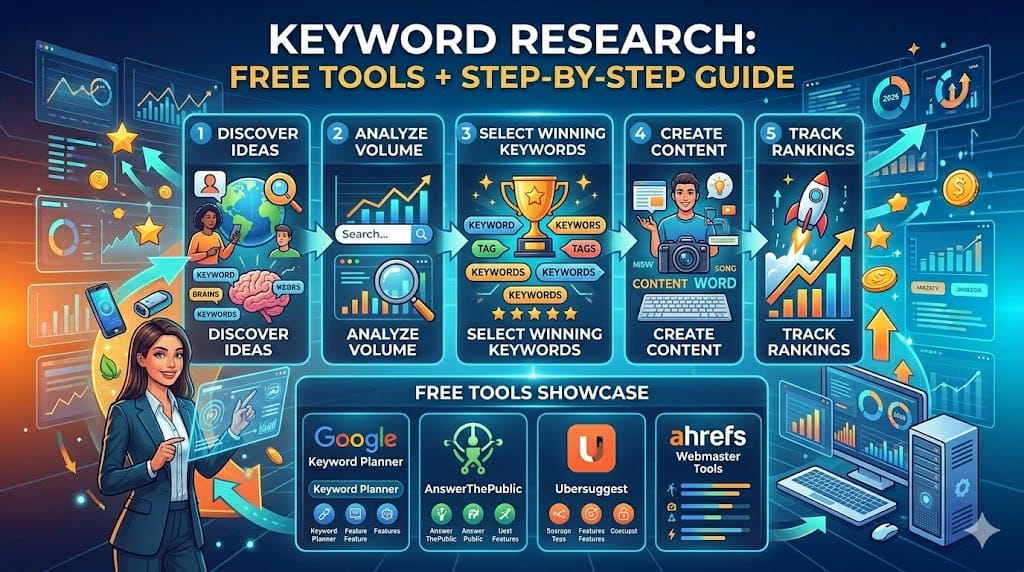
Up next: Top 7 Free Keyword Research Tools in 2026 — the tools that help you find what your audience is actually searching for, reviewed and ranked for practical use.