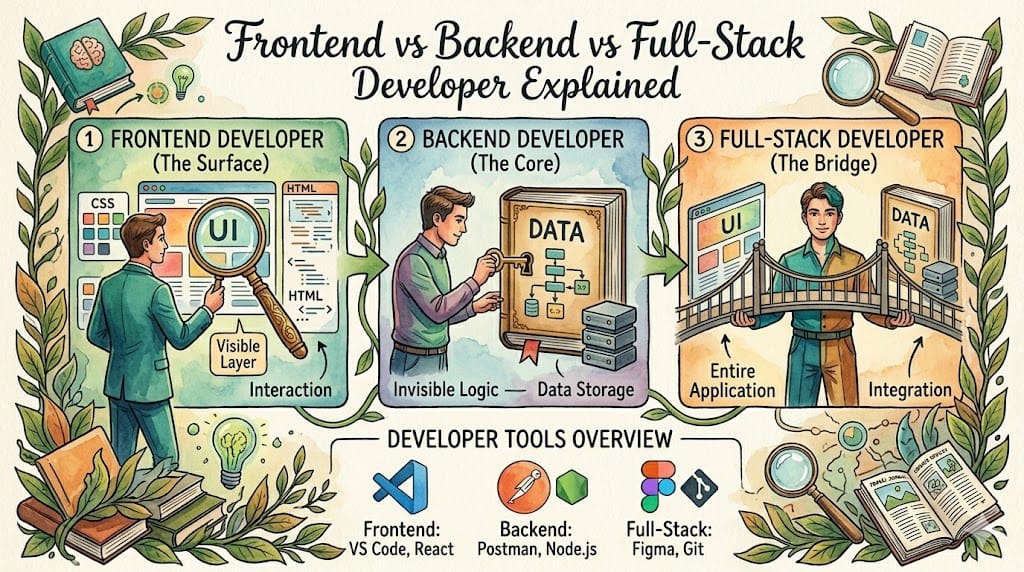
If you’re learning to code and trying to figure out what kind of developer you want to become, the frontend vs backend vs full-stack distinction is probably the first major fork in the road you’ll hit.
It’s also one of the most consistently misexplained — not because the concepts are complicated, but because most explanations describe the tools each role uses rather than the thinking each role requires. And the thinking difference is what actually matters when you’re deciding where to invest your learning time.
Here’s the real breakdown — what each role does, how each mind works, what the job market looks like for each in 2026, and how to decide which path fits you.
The Analogy That Makes It Click
Before definitions, an analogy that maps accurately to the actual division of work.
Think of a web application as a restaurant.
The dining room is what customers see and interact with — the tables, the menu design, the lighting, the way the waitstaff presents dishes. The experience of being there. This is frontend.
The kitchen is where the actual work of producing the food happens — the recipes, the inventory, the cooking processes, the systems that ensure the right dish gets to the right table at the right time. Invisible to customers, completely essential to the operation. This is backend.
A chef-owner who designs the restaurant, cooks the food, greets customers, and manages the whole operation? That’s the full-stack developer — someone who works across both domains, usually with deeper expertise in one than the other.
The analogy breaks down at the edges (it always does), but it captures the essential truth: frontend and backend are not different levels of programming — they’re different domains of programming, with different concerns, different tools, and different definitions of what “good” looks like.
Frontend Development: Building What People See
Frontend development is the discipline of building user interfaces — everything a person sees and interacts with directly in their browser.
When you click a button and something happens on screen without the page reloading, that’s frontend JavaScript at work. When a navigation menu smoothly slides open on mobile, that’s CSS transitions. When a product image carousel responds to your swipe gesture, that’s a frontend component managing state and events. When a form validates your email address before you submit it, that’s frontend logic running in your browser rather than on a server.
The core technologies:
Every frontend developer works with three foundational technologies regardless of what frameworks they use.
HTML (HyperText Markup Language) defines the structure and content of a page — what elements exist, what order they appear in, what semantic meaning each element carries. It’s the skeleton.
CSS (Cascading Style Sheets) controls visual presentation — layout, colors, typography, spacing, animation, responsive breakpoints. It’s the appearance. CSS looks simple on the surface and has an enormous depth of complexity underneath. Developers who truly master CSS layout systems (Grid, Flexbox) and responsive design are genuinely rare and genuinely valuable.
JavaScript makes pages interactive — handling user events, fetching data without full page reloads, manipulating the DOM dynamically, running logic in the browser. It’s the behavior.
On top of these foundations, most frontend roles in 2026 require proficiency with at least one JavaScript framework. React is the clear dominant choice — it powers the frontends of Facebook, Instagram, Airbnb, and tens of thousands of smaller applications, and it appears in more job listings than Vue, Angular, and Svelte combined. Learning React after JavaScript fundamentals is the most reliable path into frontend employment.
What frontend developers actually think about:
More than any other role, frontend development requires thinking about humans — how people perceive layouts, how they use interactive elements, how they respond to feedback, how their attention moves across a screen. Performance matters here differently than in the backend: a backend query that takes 200ms is usually invisible; a frontend interaction that takes 200ms feels sluggish.
Frontend developers debug by inspecting rendered HTML, network requests, and JavaScript execution in browser developer tools. They think about accessibility — whether their interface works for users with visual impairments, motor limitations, or cognitive differences. They think about devices and screen sizes — the same interface must work on a 4K monitor and a budget Android phone. They think about loading behavior — what does the user see in the first 100ms, the first 500ms, the first 2 seconds?
Who thrives here: People who are drawn to visual craft, who notice small UX details that most users don’t consciously register but definitely feel, and who find satisfaction in the direct feedback loop of changing a line of CSS and seeing the result immediately.
Backend Development: Building What Nobody Sees
Backend development is everything that happens on the server — the code that runs out of sight, handling the logic, data storage, and business rules that make an application actually work.
When you log into a website and it shows you your data rather than someone else’s, that’s the backend enforcing authentication and authorization. When an ecommerce site processes your payment, updates inventory, sends you a confirmation email, and creates a shipping label simultaneously, that’s the backend orchestrating multiple systems. When a social feed shows you content relevant to your interests, that’s a backend algorithm making thousands of decisions per second.
The core concerns:
Backend development deals with different problems than frontend. The primary concerns are data — how to store it, retrieve it efficiently, keep it consistent, protect it from unauthorized access — and logic — the rules governing how the application behaves in every possible scenario.
Most backend development involves working with at least one database. Relational databases (PostgreSQL, MySQL) store data in structured tables with defined relationships. Non-relational databases (MongoDB, Redis) offer different trade-offs for specific use cases — Redis for high-speed caching, MongoDB for flexible document structures. Understanding when to use which, and how to write queries that don’t destroy performance at scale, is a core backend skill.
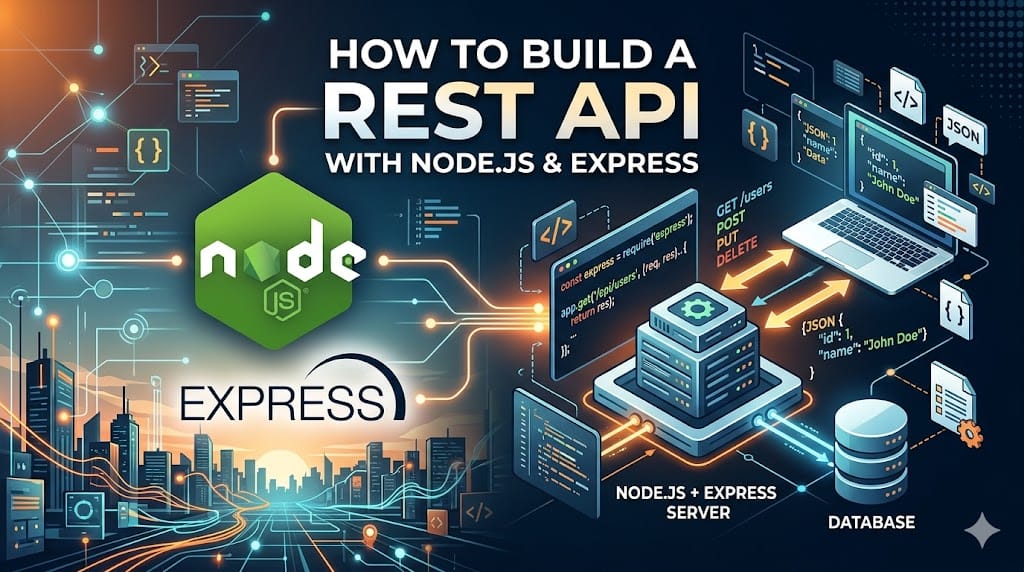
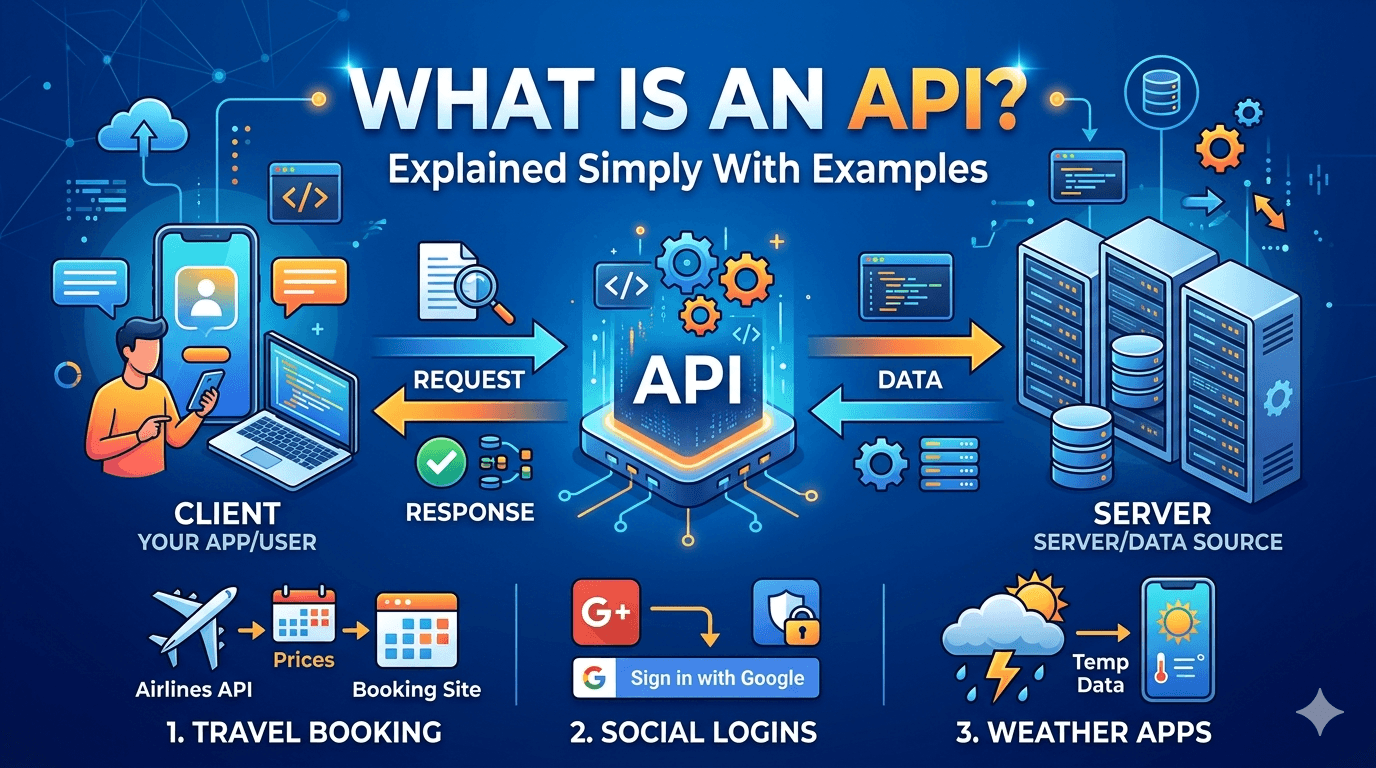
Backend developers build APIs — the structured interfaces that let the frontend (and other systems) request and manipulate data in controlled ways. They write the business logic that enforces rules: “a user can only cancel an order within 24 hours of purchase,” “discount codes can only be used once per account,” “this endpoint requires administrator privileges.” They think about security at every layer — SQL injection, authentication bypass, rate limiting, input sanitization.
The languages most used in backend 2026:
Python dominates data-heavy and AI-adjacent backend work — Django and FastAPI are the leading web frameworks. JavaScript (Node.js) allows frontend developers to use the same language on the server, making it a common choice for teams that want to minimize context switching. Go has grown substantially for performance-critical backend services. Java remains dominant in enterprise environments. PHP, despite its reputation, still runs the backend of roughly a third of the internet via WordPress and Laravel.
Who thrives here: People who enjoy working with systems, thinking about data architecture, solving performance problems at scale, and don’t need visual immediate feedback to feel productive. Backend developers often describe their job as solving puzzles — an application behaves unexpectedly under load, and they trace the execution path through multiple systems to find where the logic breaks down.
Full-Stack Development: The Full Picture
A full-stack developer works across both frontend and backend — building complete features end-to-end rather than specializing in one side of the application.
Here’s the nuance most descriptions miss: virtually no full-stack developer is equally proficient in both domains. In practice, full-stack means “capable on both sides, expert on one.” A developer might be a strong React developer who can also write competent Node.js APIs, or a strong backend developer who can build functional (if not polished) interfaces when needed.
Why full-stack is genuinely valuable:
On small teams and in startups, full-stack developers are efficient — one person can own an entire feature from database schema to user interface without handing off between specialists. For freelancers and solo founders building their own products, full-stack capability is essentially required. You can’t build a complete web application with only one half of the skills.
Full-stack developers also communicate better across teams. A frontend developer who understands how backend authentication works makes better technical decisions about how to handle tokens in the browser. A backend developer who understands how React state management works writes APIs that are easier to consume from the frontend. The cross-domain understanding pays dividends in system-level thinking.
The honest trade-off:
Depth. A frontend specialist with five years of experience building complex UIs in React will typically be significantly more skilled at that specific domain than a full-stack developer with the same tenure. Specialist skills compound more efficiently than generalist skills.
The job market reflects this directly. Specialist frontend and backend roles at larger companies frequently pay more than generalist full-stack roles. Conversely, full-stack roles dominate at smaller companies and startups where teams are lean and versatility matters more than depth.
The 2026 Job Market: What Pays, What’s In Demand
The developer job market in 2026 has shifted in ways that matter for career planning.
AI coding tools — Copilot, Cursor, Claude, and others — have raised the floor of what a single developer can produce without reducing the ceiling of what skilled developers achieve. The practical effect: teams are hiring fewer mid-level generalists and more senior specialists who can architect systems, evaluate AI output critically, and make decisions that junior developers following AI suggestions can’t.
Frontend demand remains strong, but the role has evolved. Proficiency with a JavaScript framework is table stakes; the differentiation is in performance engineering, accessibility, and the ability to build complex interactive experiences that AI code generation handles poorly. React remains the dominant framework — knowing it well opens more doors than any other frontend skill.
Backend demand has, if anything, intensified — particularly for developers with experience in data infrastructure, API design, and the systems that AI applications depend on (vector databases, LLM API integration, real-time processing pipelines). The AI engineering category — building applications that incorporate large language models as components — is almost entirely backend work.
Full-stack demand is highest in the startup and SMB market, where small teams need to move fast and can’t afford to have frontend and backend blocked on each other. The rise of frameworks like Next.js (React with server-side rendering and API routes) has made full-stack JavaScript development significantly more accessible, making it a practical path for beginners who want to build complete products without learning two separate ecosystems.
How to Decide Which Path Is Right for You
Rather than prescribing a path, here’s the honest set of questions worth answering for yourself.
Do you have a strong reaction to visual work? If adjusting a button’s border radius until it looks exactly right brings you genuine satisfaction, frontend. If that sounds tedious and you’d rather be thinking about the systems underneath, backend.
What kind of problem-solving do you enjoy? Frontend problems are often about perception and interaction — how does this feel to use? Backend problems are often about correctness and efficiency — does this logic handle every case? Is this query fast enough at a million rows?
What do you want to build? If your goal is a career in data science, machine learning, or AI engineering, backend with Python is the natural foundation — the ML ecosystem lives there. If you want to build interfaces, products, and user experiences, frontend. If you want to build complete products independently — as a freelancer, a founder, or a one-person engineering team — full-stack is the practical choice.
How much ambiguity are you comfortable with? Full-stack development is the highest-ambiguity role — you’re making decisions across the entire system, often without expert-level knowledge in every area. Specialists can go deeper, optimize harder, and often produce cleaner work in their domain. Full-stack developers ship faster and work more independently.
There’s no wrong answer. All three paths lead to legitimate, well-compensated careers. The right path is the one that fits how you think — and the best way to find out is to write real code in both environments before committing to a direction.
Up next: Git for Beginners — the version control system every developer needs from day one, explained with real terminal examples and zero assumed knowledge.