Here’s an uncomfortable truth nobody in the SEO industry likes to say out loud: most “beginner’s guides to SEO” are secretly beginner’s guides to SEO circa 2019.
They’ll tell you to stuff your target keyword into your H1, build some backlinks, and watch the traffic roll in. Clean. Simple. Outdated.
In 2026, Google doesn’t just rank pages anymore. It reads them, synthesizes them, and — increasingly — answers users’ questions itself, without sending anyone to your website at all. That changes what SEO means, what success looks like, and what you actually need to do about it.
This guide won’t pretend otherwise. Here’s what SEO really is in 2026 — from the absolute foundations to the uncomfortable new reality every website owner needs to understand.
Let’s Start With the Basics: What Is SEO?
SEO stands for Search Engine Optimization. At its core, it’s the practice of making your website more visible in search engine results — primarily Google, which still handles somewhere between 9 and 14 billion queries every single day.
When someone searches for “best laptop under $1,000” or “how to remove a stripped screw,” Google shows them a ranked list of results. SEO is the discipline that determines who appears at the top of that list and who languishes on page three, where no human being has ever willingly ventured.
But here’s the part beginners often miss: SEO is not about gaming Google. It never was, despite what a lot of shady marketing agencies would have you believe. Google’s entire business model depends on surfacing genuinely useful content. When you focus on making your content genuinely useful, you’re working with the algorithm, not around it. That’s always been the most durable SEO strategy, and it’s even more true now than it was five years ago.
How Google Actually Finds and Ranks Your Content
Understanding this process isn’t just academic — it directly informs what you should and shouldn’t spend your time on.
Step 1: Crawling
Google deploys automated bots called crawlers (also called spiders, though nobody uses that term anymore without feeling slightly embarrassed about it). These bots travel the web by following links — from one page to the next, from one site to another — continuously discovering new content and checking whether existing content has changed.
If no other website links to your page, Google’s crawlers may never find it. This is why internal linking and backlinks matter so much — they’re literally the roads that lead Google to your door.
Step 2: Indexing
Once crawled, pages are processed and stored in Google’s index — an enormous database of content that Google considers eligible to appear in search results. Think of it as Google’s version of a library catalogue.
Here’s something many beginners don’t realize: not every page gets indexed. Google makes constant decisions about what’s worth storing. Thin content, duplicate pages, and sites with poor technical health get deprioritized or excluded entirely.
Step 3: Ranking
When someone searches for something, Google runs through its index and ranks the most relevant, high-quality pages against hundreds of signals — content relevance, page speed, mobile usability, backlink authority, E-E-A-T (more on this below), and increasingly, how well your content serves as a source for its AI systems.
This is where most of the actual SEO work happens: making your content rank higher than competing pages for queries your audience is actually typing.
The Three Pillars That Haven’t Changed
Despite everything that’s evolved around them, these three pillars remain the foundation of any solid SEO strategy.
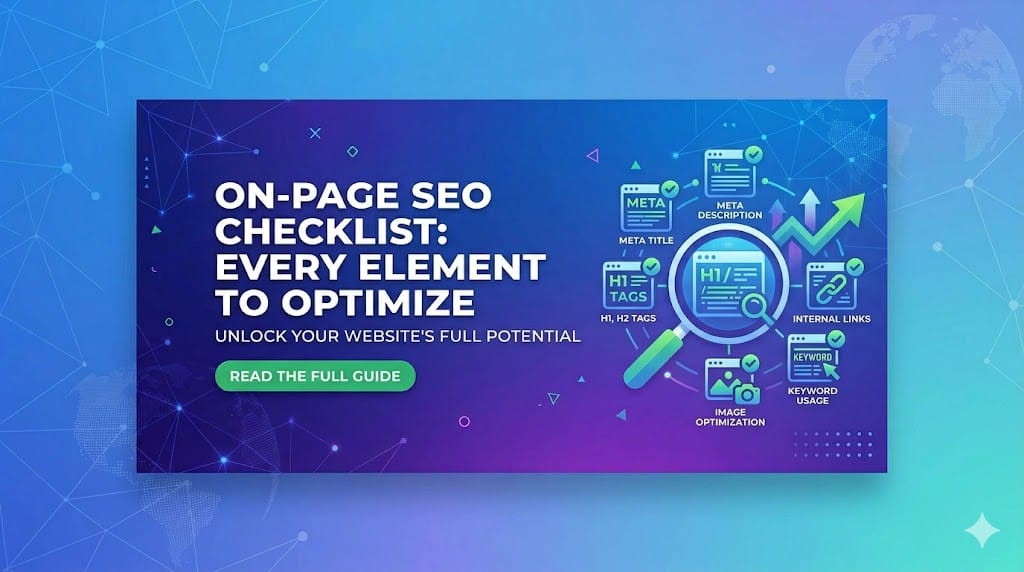
On-Page SEO is everything you control directly on your site: the keywords you target, how you structure your content with headings, the quality and depth of your writing, your title tags, meta descriptions, image alt text, and the internal links you build between your own pages.
Off-Page SEO is your reputation in Google’s eyes, built primarily through backlinks — other websites linking to yours. A link from a well-respected industry publication tells Google your content is worth referencing. A thousand links from spammy directories tell Google the opposite. Quality absolutely dominates quantity here.
Technical SEO is the plumbing. Page speed, mobile responsiveness, HTTPS security, structured data, proper crawlability — these aren’t exciting topics, but if the technical foundation is broken, nothing else you do will matter much. It’s the difference between a beautifully written article that Google can read and one that it can’t find.
Why SEO Is Still Worth Your Time in 2026
Paid ads disappear the moment your budget runs out. Social media reach is increasingly throttled unless you pay to boost. Email lists take years to build. SEO is the only channel that compounds: a well-optimized article published today can drive consistent, free traffic for three to five years.
That said, the landscape has shifted considerably — and pretending it hasn’t would be doing you a disservice.
The Part Nobody Tells Beginners: Google Is Now Competing With You
This is the honest conversation.
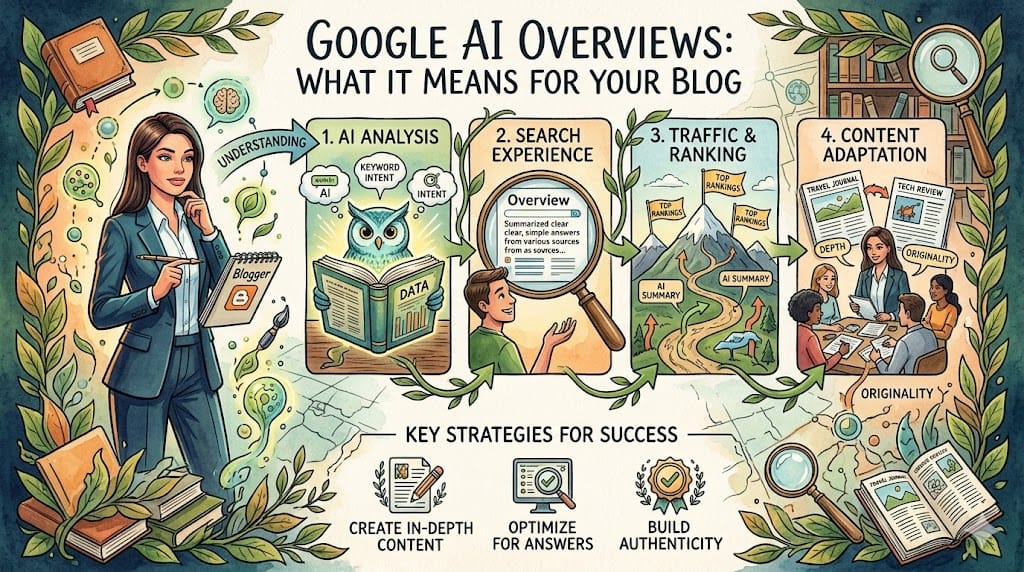
In May 2024, Google rolled out AI Overviews globally — those AI-generated summaries that now appear above the traditional search results. By February 2026, they were triggering on approximately 48% of all tracked queries, up from 31% a year prior. That number is still climbing.
The impact on traffic has been severe and well-documented. Seer Interactive’s September 2025 study — one of the most rigorous analyses to date, covering 25.1 million organic impressions across 42 organizations — found that organic CTR dropped 61% for queries with AI Overviews present, falling from 1.76% to 0.61%.
To put that in plain terms: if your article used to get 100 clicks per month from a query that now shows an AI Overview, you’re probably getting around 39.
Pew Research’s March 2025 study, based on actual browsing data from 900 U.S. adults, found that only 8% of users clicked a traditional result when an AI summary appeared — compared to 15% without one. And 26% of users ended their session entirely after seeing the AI summary.
This is what the industry calls a “zero-click search” — and SparkToro’s research puts 58% of Google searches in this category today.
So Is SEO Dead?
No. But the version of SEO that depended on ranking #1 and watching clicks pour in is under serious pressure.
The more interesting finding in all this data is what happens to brands that are cited inside AI Overviews. Cited brands earn 35% more organic clicks and 91% more paid clicks compared to non-cited brands on the same queries. One AI citation can generate more qualified traffic than ranking #3 in traditional results.
Being cited in an AI Overview is the new “position zero.” It’s more powerful than the featured snippet ever was. And it requires better content — not more content, not more backlinks, just more genuinely useful, well-structured, accurate writing.
What Google’s E-E-A-T Actually Means for Your Content
Google’s quality rater guidelines have long emphasized E-A-T (Expertise, Authoritativeness, Trustworthiness). In 2022, they added a second E: Experience. That addition was quietly significant.
It’s no longer enough to write accurately about a topic. Google increasingly wants evidence that the author has lived it. A review of a hiking boot written by someone who actually wore it through 200 miles of trail is more valuable than one assembled from manufacturer specs. A productivity guide written by someone who runs a team is more credible than one synthesized from other productivity guides.
This is a genuine competitive advantage for individual bloggers and small businesses. You have experiences that larger, more generic content farms simply cannot replicate.
Write from your actual experience. Cite your own results. Name the specific mistakes you made and how you fixed them. That’s the content that earns trust — from readers and from Google.
A New Concept Worth Learning: GEO
Generative Engine Optimization (GEO) is the emerging practice of optimizing content not just for Google’s blue links, but for AI systems — Google’s AI Overviews, ChatGPT, Perplexity, and others — to cite and reference.
The good news: GEO and traditional SEO are not in conflict. The content qualities that earn AI citations are the same ones that have always defined high-quality SEO.
A few specific tactics that help with both:
Answer first, explain second. Open each section with a direct, concise answer to the question the heading implies. AI systems extract these opening sentences heavily. So do readers who are skimming.
Use real data with sources. Citing a study — even a well-known one — makes your content more citable. AI systems favor content that grounds claims in evidence.
Structure your content for extraction. Clear H2 and H3 headings, short paragraphs, and summary sentences make it easy for both humans and AI to pull out the key insight. Dense, unbroken prose frustrates both.
Build topical authority, not just individual articles. A cluster of interlinked articles covering all angles of a topic signals to Google that your site is a genuine authority in that space — not just someone who published one good piece.
How to Start: Five Things Worth Doing This Week
SEO is a long game. But a few decisions you make in your first week will affect your results for years. These are the ones that actually matter:
1. Pick your topics with intention. Don’t write about everything in your niche. Pick 8–10 core topics you’ll cover deeply. Build several articles around each one. This topical depth is what modern Google rewards.
2. Understand search intent before you write. Search “best project management software” yourself. Notice what Google shows. Are they listicles? Comparison tables? Long-form reviews? That format is what’s already working for that query — and your content should match it, while being better.
3. Set up Google Search Console on day one. It’s free. It shows you exactly which queries your site appears for, how many people see it, and how many click. That data is the foundation of every optimization decision you’ll ever make.
4. Write longer introductions than feel comfortable. The first 100 words of any article determine whether someone reads the rest. Don’t start with “In this article, we will explore.” Start with something true, specific, and slightly surprising.
5. Earn your first backlinks by being genuinely useful. Publish something that answers a question better than any existing resource. Share it where your audience actually is. Link to it from your other content. Don’t buy links, don’t spam forums. One legitimate backlink from a real site in your niche is worth more than a hundred from link farms.
The Honest Summary
SEO in 2026 is harder than it used to be. The rules have genuinely shifted, and anyone who tells you otherwise is selling something.
But it’s also a field where effort and quality still compound in ways that almost no other marketing channel allows. The sites winning right now aren’t the ones with the biggest budgets or the most aggressive link-building campaigns. They’re the ones that built enough genuine authority and expertise that Google’s AI systems choose to cite them — which sends more qualified traffic than a traditional ranking ever did.
That’s worth building toward. And the fundamentals of how you build it haven’t changed as much as the headlines suggest.
Create content that genuinely helps people. Structure it so it’s easy to read and easy to parse. Build authority in your niche over time. Be patient.
That’s still the whole game.